Not getting along with your in laws or your partner’s family members? Keep reading to find out ways you may progress within the relationship.
Evaluate the dynamic of this family
Express what you are experiencing
Sometimes using a third party is beneficial because it helps to hear things from someone else other than your partner (especially if this person feels as if he/she is being attacked or their family is being attacked)
Stay firm and committed to your feelings – do not settle
Make sure to use appropriate language – use “I statements” about your true feelings (Not attacking! Simply saying “I feel….”)
Set boundaries with your partner (make clear what you will and will not tolerate from their family)
Have a plan set with your partner (if you know you will be around the family, maybe set a certain amount of time you will be there for)
In a different perspective…Take a step back and re-evaluate. The family may be right. Maybe you are dating a toxic person. Maybe your partner really is the problem. Maybe your family have noticed a change in you since you have been dating him/her. Take time to self-reflect. Does your family truly know the person you are with?
You and your partner, both, play a vital role in the dynamic of your relationship. However, do you know which role you play? Are you the support, the shadow, the overachiever, or the underachiever?
Support
Shadow
Overachiever
Underachiever
Support- you are consciously available to your partner in all aspects: mentally, physically, and emotionally. You compliment each other.
Shadow – you feel as if you are just filling up space and you are accommodating who you are for your partner.
Overachiever – you have everything together. You are the backbone and the go-to person within the relationship.
Underachiever – you always have your hand out somewhere in need of help.
Remember! These are not personality traits, but specifically a dynamic. Often times our focus is on our partner so when there is an issue within the relationship, we tend to blame that person. However, we need to reevaluate ourselves and see how we take part in that specific issue.
Though when reevaluating, do not confuse habits with the essence of who you are. Do not make every issue a challenge. If it is not against your values or your morals in life then be willing to listen to and compromise on things with your partner.
*Note* You may not always be the supportive one, the shadow, the overachiever, or the underachiever. The dynamics may change from time to time.
Information from The Love Hour podcast with Dr. Maria Dominguez
In the beginning of a relationship there is a phase called Limerencewhich is when the brain is basically on drugs. There’s a lot of serotonin and oxytocin being released. This phase, typically, lasts 6-8 months. After this phase is when bonding, attunement (see previous post), and checking in with your partner becomes even more important. It is vital to communicate your expectations before entering into a relationship. Things you think are a common norm for a relationship, you still need to communicate with your partner. Do not make assumptions! It is best to know for sure if you are on the same page about everything. That way, you will not have to worry about Relational Norm Violations (RNVs). An RNV is when you had an understanding, a shared norm within the relationship, and someone stepped outside of that.
Once you and your partner has faced an RNV, then there are 5 steps to take as a part of a “repair process“.
The 5 Steps:
1. Feelings: Share how you felt (“I felt…”). Do not say why you felt that way quite yet. Avoid commenting on your partner’s feelings (“I felt like you…).
2. Realities: Describe your “reality.” Take turns. Summarize and validate at least a part of your partner’s reality.
3. Triggers: Share what experiences or memories you’ve had that might have escalated the interaction, and the stories of why these are triggers for each of you.
4. Responsibility: Acknowledge your own role in contributing to the fight or regrettable incident.
5. Constructive Plans: Plan together one way that each of you can make it better next time.
Connection, Disconnection, Reconnection is also a repair process. There will be times where you notice you and your partner are disconnected and that may solely be because people change and evolve over time. If you have been together for years and you notice your partner is not into something they use to love, then that is when you need to adapt and reconnect and A.T.T.U.N.E.
Please remember…when discussing an issue, do not blame, or attack your partner. Make statements in a nice and clear manner. Thoroughly explain to them so they can have a better understanding. Then, come to a neutral ground and compromise to make the situation better.
It turns out that trust is related to the secretion of oxytocin, which is the “cuddle hormone,” the hormone of bonding. Interestingly enough, men don’t just secrete oxytocin, they secrete vasopressin as well. Vasopressin is a hormone associated with aggression. So there is evidence that the bonding experience with somebody—secreting oxytocin, the trust hormone—is very powerful, it suspends fear. But it doesn’t have as protective of an effect in men as it does in women.
Building Trust
Trust is built in very small moments. In any interaction, there is a possibility of connecting with your partner or turning away from your partner. Example: on your way home from work you plan to surprise your significant other by taking them out on a nice date. Once you get home, you notice they are not in the best mood. Instead of continuing on with your plans, you put them aside and ask what is wrong. At this moment you are building trust because you are there for your partner when they need you to be. You were connecting rather than choosing to think about your surprise which they would not have enjoyed anyways if they were not in a good mood.
Dan Yoshimoto has discovered that the basis for building trust is really the idea of attunement. He has broken this down with the acronym A.T.T.U.N.E
A
T
T
U
N
E
Awareness of your partner’s emotion (being aware of your emotions as well as your partner’s emotion)
Turning away, toward, or against the emotion Away – completely ignore your partner which can be internalized as rejection (know that a negative response is better than no response at all) Toward – respond (usually in agreement or with empathy and understanding) Against – respond negatively
Tolerance of two different viewpoints (know you’ll never see something exactly the same because you are different humans)
Understand your partner (just being able to understand your partner)
Non-defensive responses to your partner (being active listeners and not responding defensively)
Empathy (putting yourself in your partner’s shoes)
Trust Metric
On this graph (at left), you can see how one couple rated their interaction. The blue dots represent the wife’s ratings over 15 minutes of conversation; the red dots represent the husband’s ratings. When you add them together, these ratings are a constant, which means that in this interaction, her gain is his loss and his gain is her loss. When we scientifically tested these so-called trust and betrayal metrics, we found that a high trust metric is correlated with very positive outcomes, such as greater stability in the relationship.
We discovered that if a wife trusts her husband, both of their blood consistently flows slower—not only during their conflict discussion but at other times as well. That’s associated with better health and a longer life.
Have you ever heard someone mention sex and God in the same sentence? Yeah, probably not! Churches love to act like sex is such a bad thing and a taboo topic. God is the one who created sex and he did so because he wants both commitment and passion for us. Now, when I say us, it is intended for married couples. However, in today’s world, singles are actually the ones who are having the most sex. (Disclaimer: Not saying this is right!) To have sex is to simply do the physical. But, God made it so that, in the most popular position, we can look into each other’s eyes and kiss each other at the same time as we’re connecting in other ways. When you connect with your partner in multiple ways, that is when your sex life takes the next step and moves from simply having sex to making love.
Making love grows the connection between two people while, also, allowing that connection to be felt on all other levels. For example, physical, mental, emotional, and spiritual are all vital levels. When we focus on the physical, we often neglect the real power, purpose, and potential that sex has to bind us together in multiple ways. This includes not only a physical connection, but sex connects us mentally, emotionally, and spiritually as well. It is a beautiful thing to be present with your partner’s mind, body, and soul when you make love.
So, my question to you is, are you truly making love? Do you and your partner connect on multiple levels? If not, then take the time to do so. Spend time together outside of the bedroom to get to know your partner mentally, emotionally, and spiritually. Become best friends! Go out together, play games together, listen to music together. Find hobbies that you both enjoy or take time to participate in activities that your partner enjoys to boost the connection between the two of you. Invest in each other’s lives. It will make it easier to navigate through the bumps in the relationship and it will take your sex life from simply having sex to making love!
*Information obtained from The Good Girls Guide to Great Sex by Sheila Wray Gregoire*
Let’s talk about sex, baby! (Salt-N-Pepa reference)
Sex is ultimately a longing, a passion, a deep desire for connection. Thomas Aquinas, writing in the 13th century, called its purposes offspring, fidelity, and sacrament. Offspring, of course, being the physical part of the relationship where the two beings become one. Fidelity is the relationship aspect when two people are confirming their commitment to one another. *Fun fact fellas…commitment is the best aphrodisiac for your girl* Then, sacrament being the spiritual component when the two become one flesh in every way.
There are 3 aspects of great sex!
Learning how everything works physically
Experiencing the deep connection that comes through making love
Creating a great friendship that fuels passion
Sex is a vital part of a relationship. The Good Girl’s Guide to Great Sex by Sheila Wray Gregoire talks about some great points on how, genetically, males are different from females. The way their brain and body is set up requires them to think of sex differently than females.
Men
Sex drive is more body-focused
Make love to feel loved
Sex is the doorway into intimacy
Guaranteed to orgasm
Challenge: accept the need of emotional attachment
Women
Body is more relationship-focused
Need to feel loved in order to make love
Intimacy is the doorway into sex
Not guaranteed to orgasm
Challenge: accept the man’s drive
Therefore, for men to get their deepest needs for sex met, they need to focus on our need for a relationship and for women to get our deepest needs for relationships met, we need to focus on our man’s need for sex.
Sex is like relationship insurance; when you make love frequently, your relationship is far more likely to go smoothly in all other areas. You’ll feel closer. You’ll feel more connected. Sex is made to reaffirm your commitment and to feel far more bonded.
In today’s time, it is pretty obvious what a healthy and unhealthy relationship looks like. It is quite easy to distinguish between the two. Well, that is when you are on the outside looking in. The phrase “blinded by love” is legit. I, myself, have been there. But, I will get into my personal story later. Right now I would like to list a few points that are important in a healthy and unhealthy relationship.
Healthy Relationship
Unhealthy Relationship
Communication – Communication is key. It is vital to any relationship to have open communication, to discuss your feelings, and to just talk.
Commitment – Being faithful, loyal, and committed to your partner at ALL times.
Compromise – Compromising means meeting in the middle and making sacrifices when needed.
Caring – Care giving includes showing support, affection, and encouragement.
Companionship – The sense of closeness. Spending time together and keeping each other company
Abuse – Physical abuse or verbal abuse
Control – Dictating what takes place
Insecurity – Uncertain and not confident
Hostile – Aggressive and antagonistic behavior
Dishonesty – Constantly lying
Disrespect – Not honoring feelings or desires
A healthy relationship is when two people build a connection based on respect, trust, honesty, support, and the 5 C’s I listed above. You should feel comfortable enough with your partner to be able to talk about anything in the world and feel as if they will not judge you. Commitment, compromising, caring, and companionship are all aspects of a relationship where you and your partner have to agree. You need to make it clear that you are committed to one another and you’re in it together. You, both, will need to compromise at different times throughout the relationship. It is not a one way street! Then, the caring and companionship should fall in line accordingly.
An unhealthy relationship is where things take a turn and become toxic. The key points I listed above are just a few things I could think of to define an unhealthy relationship. An abusive relationship without a doubt is unhealthy and is what most people think of when they think about toxic relationships. However, abuse is not the only thing that is unhealthy. Someone who likes to have control over what you do and what happens within the relationship, bringing insecurities into the relationship, someone being hostile, dishonest, and/or disrespectful are all components of an unhealthy relationship. These things can lead to anxiety, depression, stress, and even medical issues.
So I ask…are you truly happy in your relationship? We, millennials, spend a lot of our time on social media. Whether it is Facebook, Instagram, Snapchat, Twitter, etc. we are being exposed to “idols”. We follow people who we may look up to and idolize. I, myself, follow celebrity couples who I admire based on how they interact with one another and display the “ideal image” of a healthy relationship. So I say all of that to say this…often times people are putting on for social media. Many portray that they are happy by posting different statuses and sharing different pictures of them and their partner, but behind closed doors they are unhappy. There has to come a time where we do not care about what other people think or may say. It is your life to live! Do what makes you happy! Take a step back and analyze your relationship. Are you truly happy? Are you in a healthy relationship? This is something I had to do which leads me into my story.
My Story
I have had my fair share of relationships. Some were serious and some were not serious at all. Some lasting a couple of months and some lasting years. Most of them being healthy, but there was this one that was TOXIC. In this relationship, the guy was very controlling. He had been controlling from the very beginning, but, like I said in the beginning, I was blinded by love. I wasn’t able to follow any of my previous boyfriends on any social media account. I wasn’t able to like a guy’s picture on Instragram or Facebook without it being an issue. I wasn’t able to respond back to an innocent DM without it being an issue. On the weekends I had to be with him. If I wanted to spend time with my family or my friends one weekend, it led to a big argument because he had trust issues and insecurities. I completely lost myself as a human being because I thought this was love. I catered to him and what he wanted at all times. I strongly believe in not giving up and putting my all into everything, so that is what I was doing. Until one day I didn’t have anything left to give. After years and years of being controlled and being in this unhealthy relationship nobody knew about (because I keep my personal life personal) I was tired. I was drained. I was tired of pretending to be happy when deep down I was not happy. Over the years I cannot count how many times this guy broke up with me but, the last time was the LAST TIME!!! It took some time, but I finally came to my senses and realized my worth.
A few months later I began to date and met someone new. This is a guy who was dealing with me recovering from the past relationship I was just in. This is a guy who was patient enough to help lift me up out of a dark place. This is a guy who cared enough to put a broken heart back together that he did not break. This guy connected with me mentally, spiritually, and emotionally. He saw me for who I was on the inside. He would sit with me and pray. He was my shoulder to cry on. I could talk to him about anything and he never judged me. He stayed by my side while my ex boyfriend was doing things you couldn’t even imagine that should have effected our relationship. He, truly, cared about me and made sure I was happy and okay. We would have “daily deeps” every night where we discussed topics that were important to us, which gave us a better understanding of one another. We, later, decided to make our relationship official and be committed to each other. There’s been a lot of compromises made on both ends to better the relationship. We care for each other and love spending time with each other…but we, also, make time for our family and friends as well. We balance each other out! I think it took me being in an unhealthy relationship to really cherish and appreciate this healthy relationship and I couldn’t be more thankful for this one!
Dr. Gary Chapman has created a new way of thinking about love. He has: a book, a website, and a podcast explaining how you prefer to be loved and how your partner prefers to be loved based on your personalities. If you have not already, then take The 5 Love Languages Quiz to confirm which of the 5 you are. Understanding your love language will take your relationship to the next level!
Everyone has heard those words before. Sometimes a breakup is very hard to get over and sometimes you do not know how to feel or what to do once “you’re done”. The first phase of a breakup is the “crazy” phase…when you react based on your emotions (sending long text messages, posting on social media, etc). *Quick Tip: Studies show that it only takes 90 seconds…90 SECONDS…for emotions to escape your body. In order for this to be true, you have to let go! You can no longer put time, thought, nor energy into the breakup. A coping method Amy Chan discussed is breathing. Concentrate on your breath. (If you have an Apple Watch, then open the Breathe app and use it until you are calm.) She mentioned it is good to inhale for 3 seconds, hold your breath for 5 seconds, and exhale for 7 seconds. Try it! 3…5…..7…….feel any different?
Neural Pathways
A neural pathway is the connection formed by axons that project from neurons to make synapses onto neurons in another location, to enable a signal to be sent from one region of the nervous system to another.
Your body is used to getting its dosage of dopamine and oxytocin from the person you were in a relationship with. Whether it was from text messages, different levels of intimacy, etc. Depending on how long you have been in a relationship, it is going to take your neural pathways some time to prune away. You, now, have to build new pathways. Whatever you used to do with your ex, do not do it anymore! If you watched a TV show together and, now, you cannot watch it without thinking of them, then don’t watch that TV show! Give yourself time to heal.
Captain Save A Hoe!
Stop trying to save someone whom you know does not want to be saved!! All of the red flags are there, but you are ignoring them thinking you can fix them. You think you can make them become a better person. You are wrong! You can save yourself the pain and the heartache by not even getting involved with a toxic person. Everyone is not relationship material!
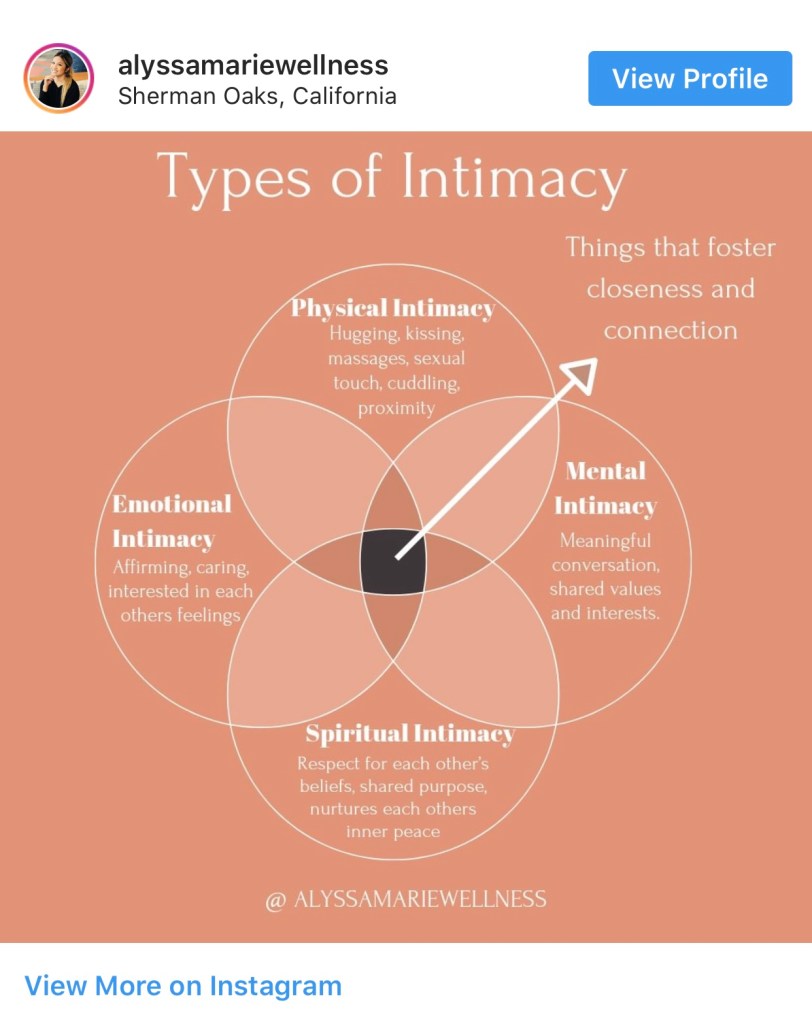
All are needed for a healthy, successful relationship
Emotionally
Mentally
Emotional intimacy is basically understanding each other’s emotions and being able to openly communicate those with one another.
To be mentally intimate with someone that means you have meaningful conversations and share values/interests.
Spiritually
Physically
Spiritual intimacy is respecting each other’s beliefs and values you live by. You can increase spiritually intimacy with your partner by connecting in a poignant moment.
The type of intimacy everyone thinks of when they hear the word “intimate”. However, physical intimacy doesn’t just mean sex. Physical intimacy has a wide spectrum with holding hands being on one end and full sexual intercourse being on the other end.








 Love 101